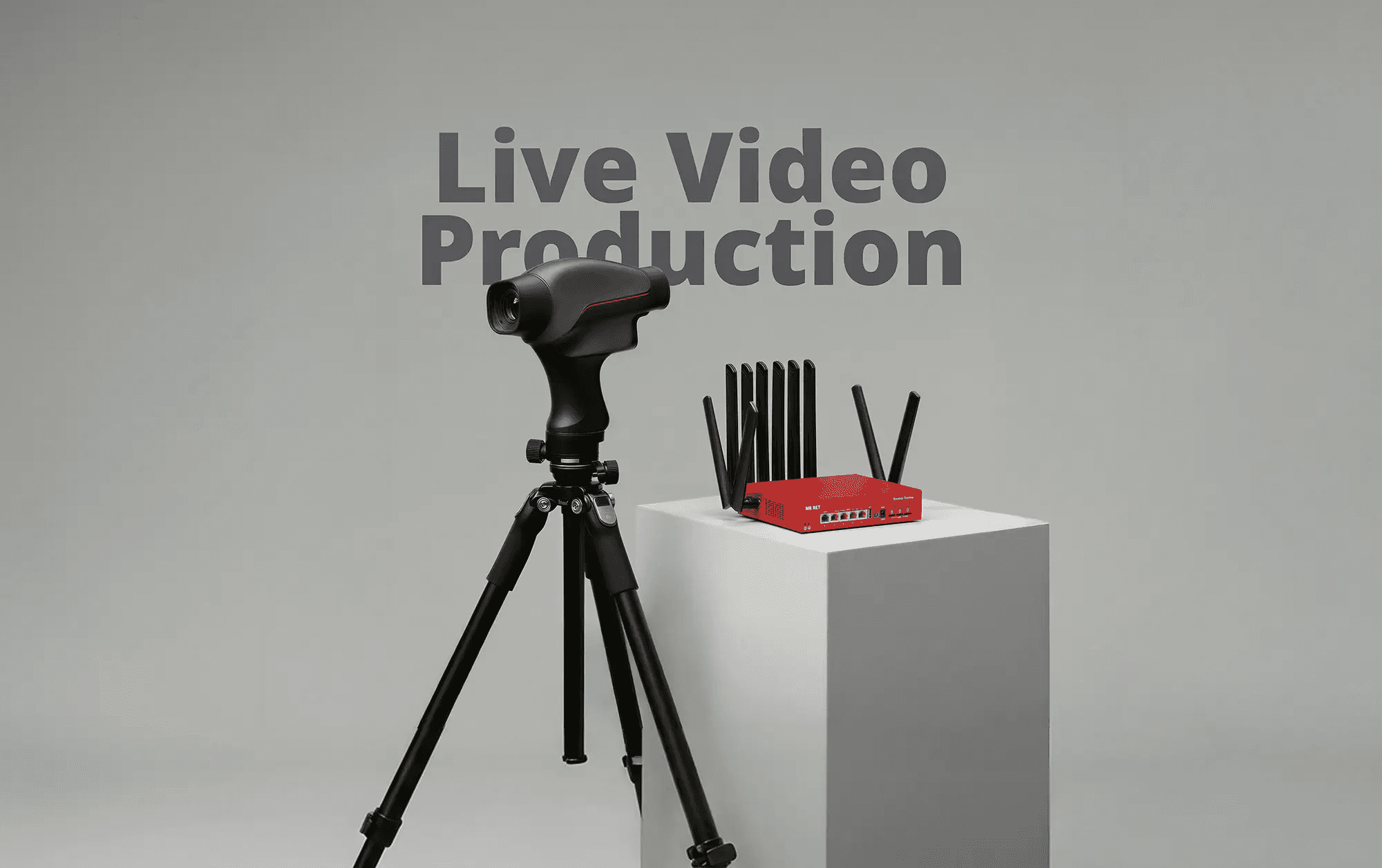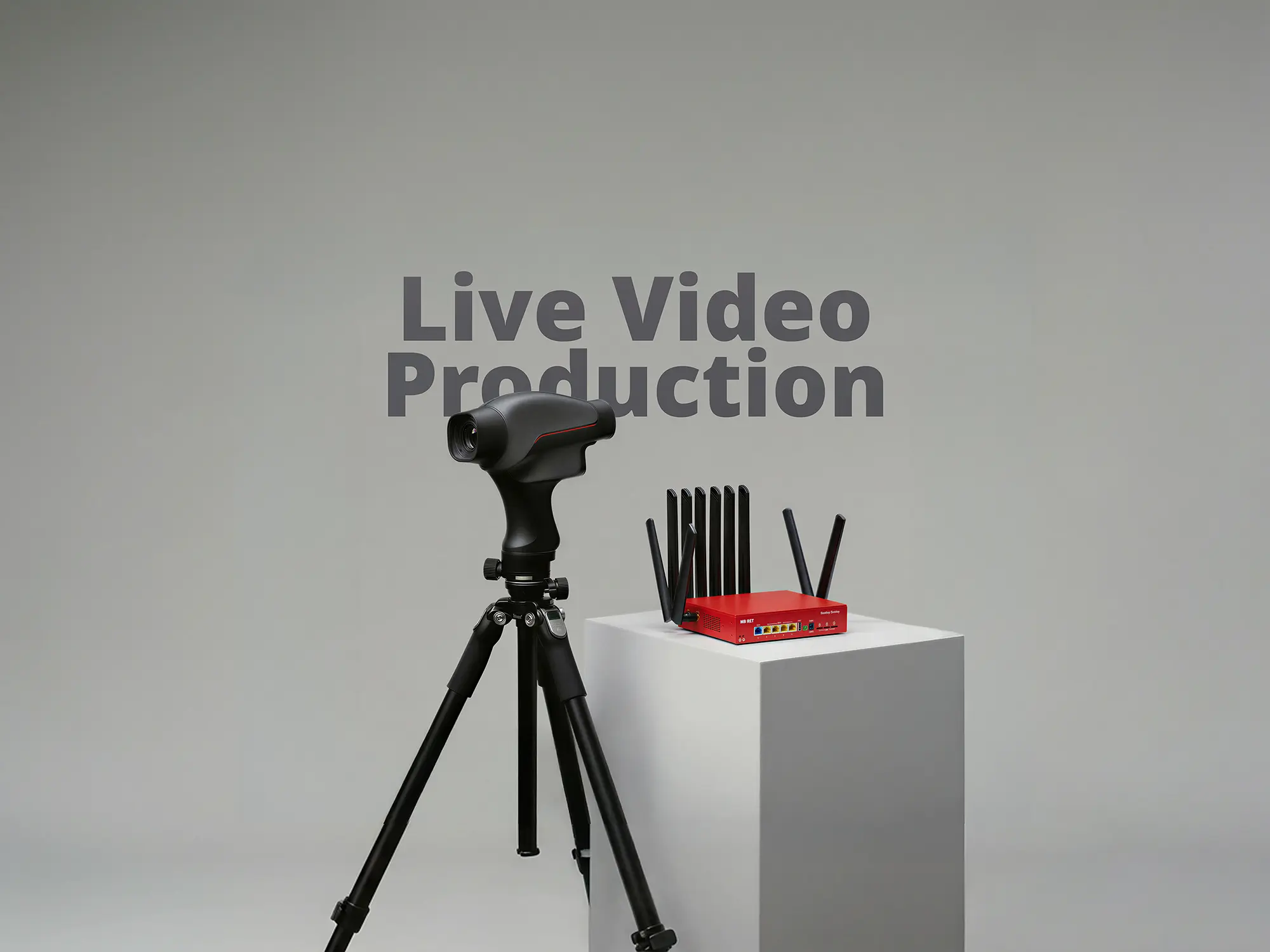












What is bonded cellular internet?
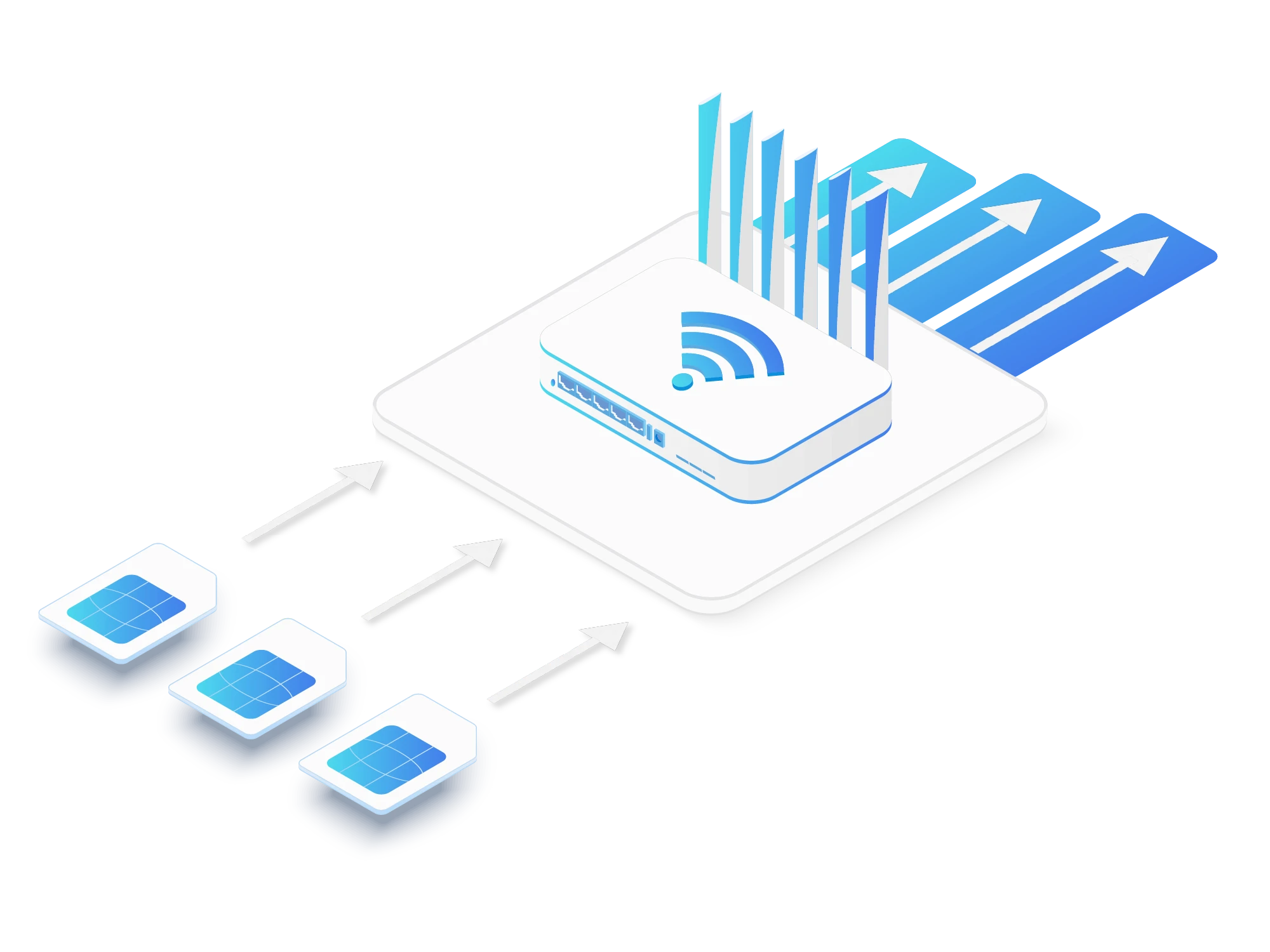
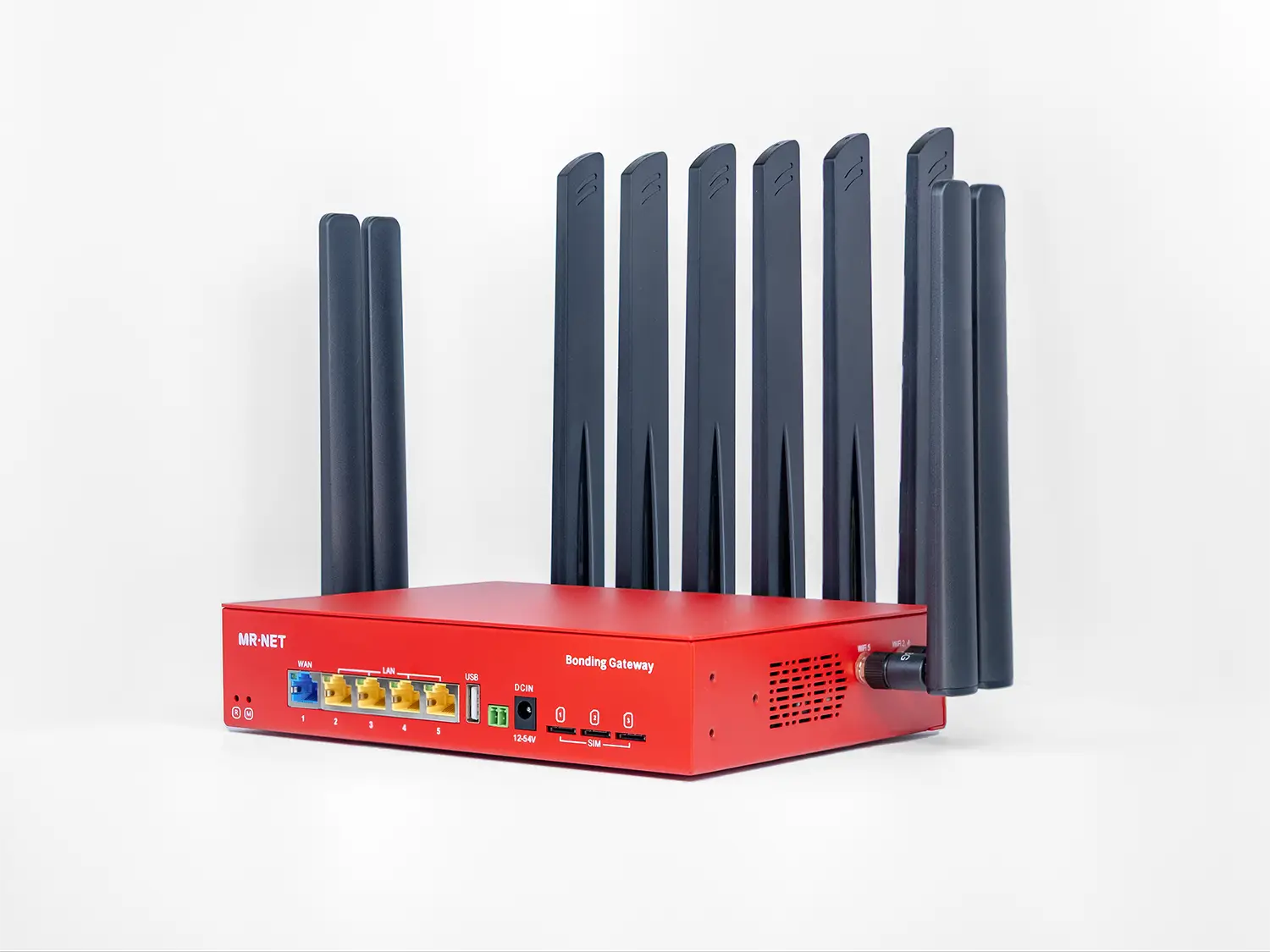
Bonded cellular internet, also called cellular bonding, combines connections from several cellular carriers into one. The MR 006 Plus gateway holds three enterprise-tier SIMs, one each on Verizon, AT&T and T-Mobile, and MR·NET’s cloud bonding server joins them into a single connection for your encoder, switcher, intercom and laptops. If one carrier slows down or drops, traffic moves to the other two. Speed drops with fewer carriers and depends on signal at your venue.
Built for the worst case, not peak speed
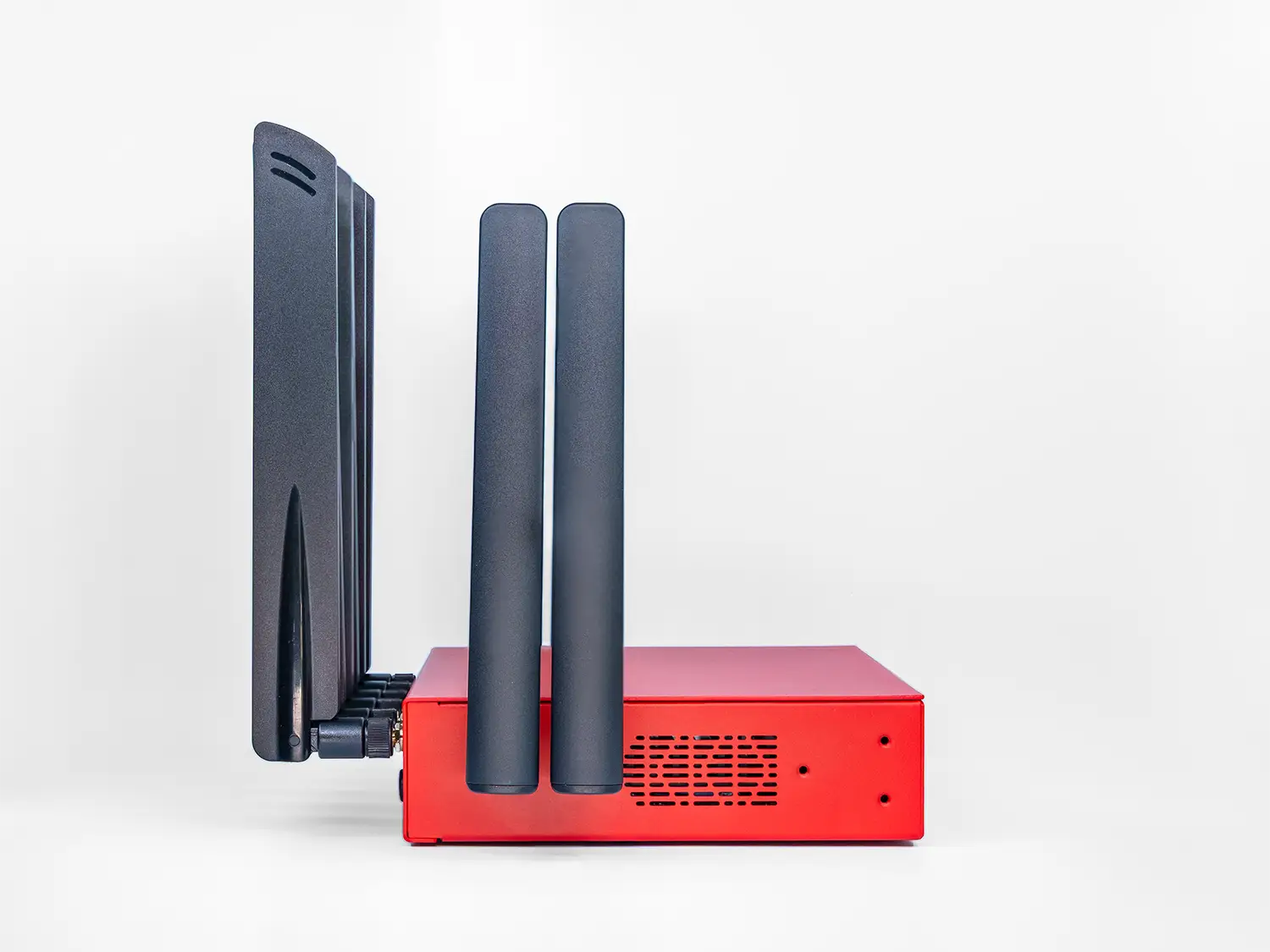
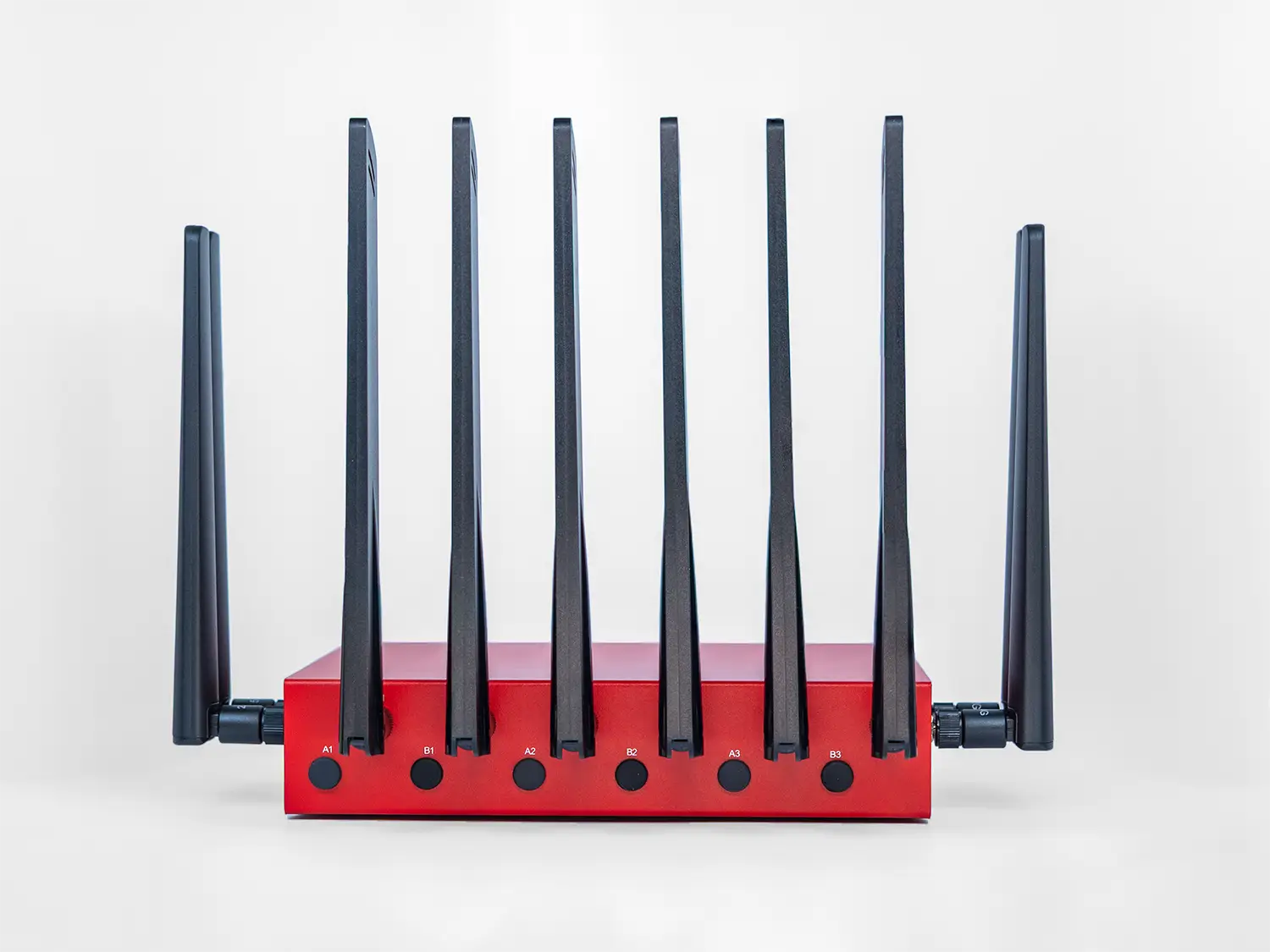
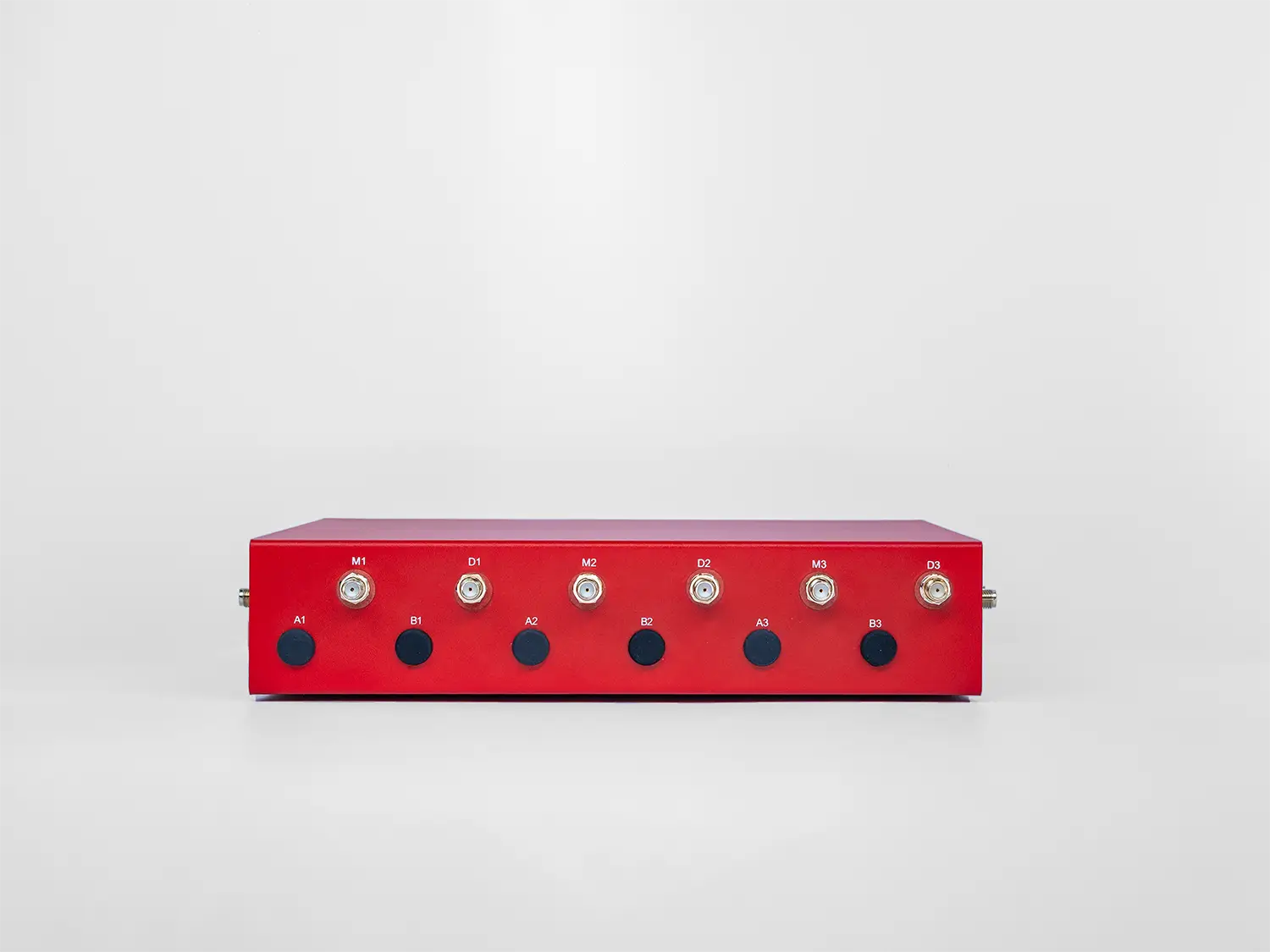
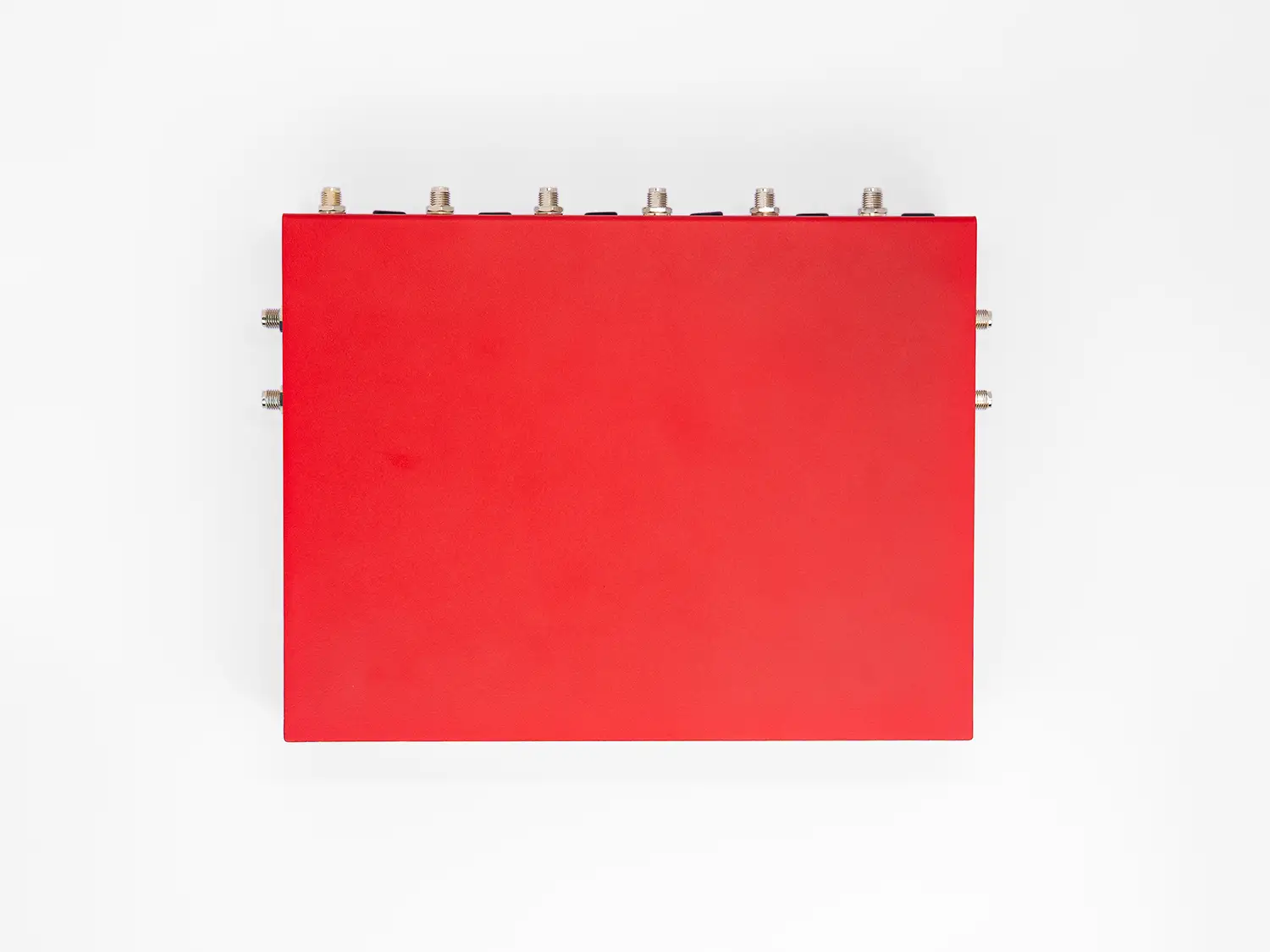
MR·NET 006 Plus
Cellular Bonding Router
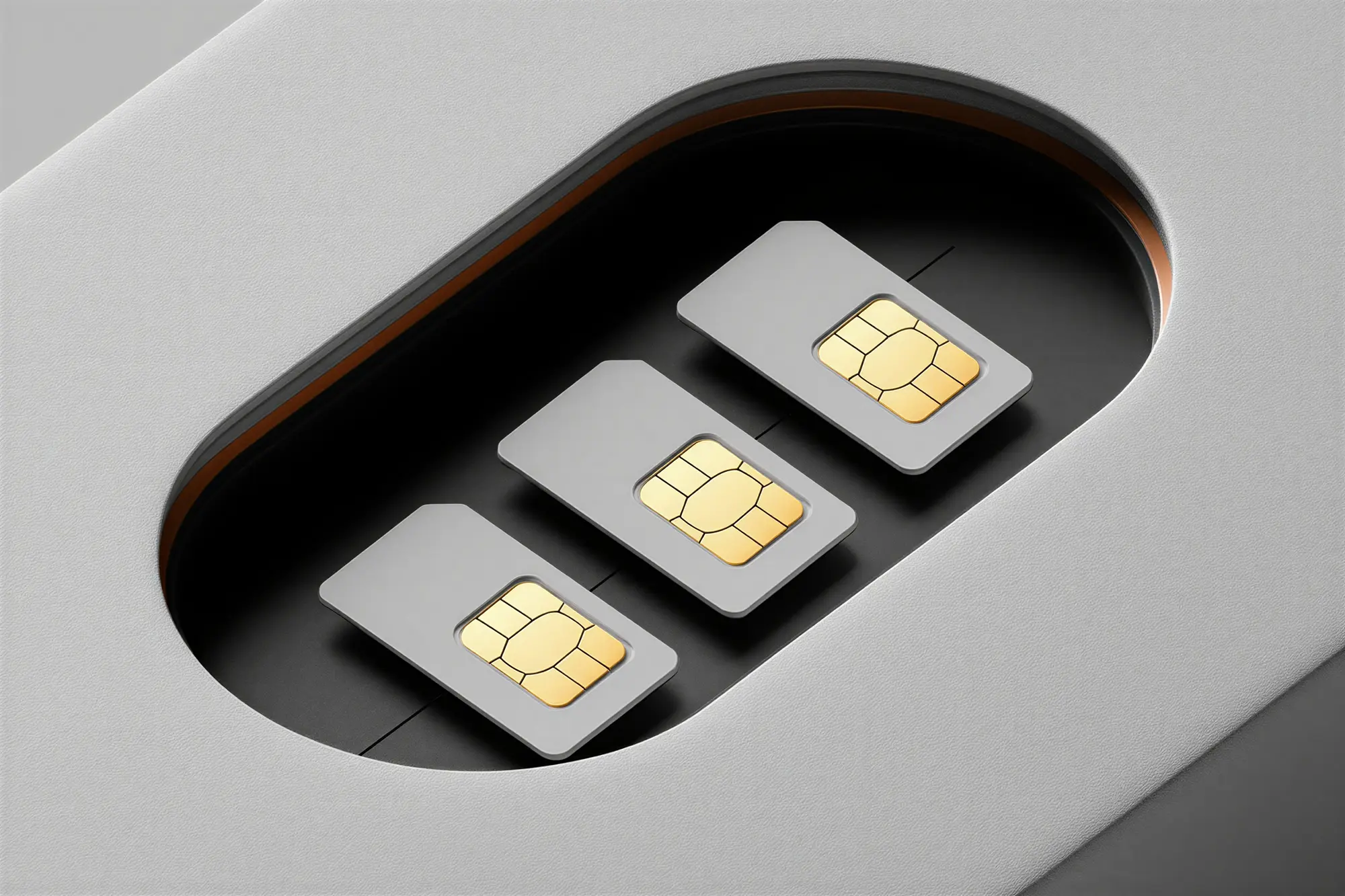
Preinstalled SIMs
LAN Ports
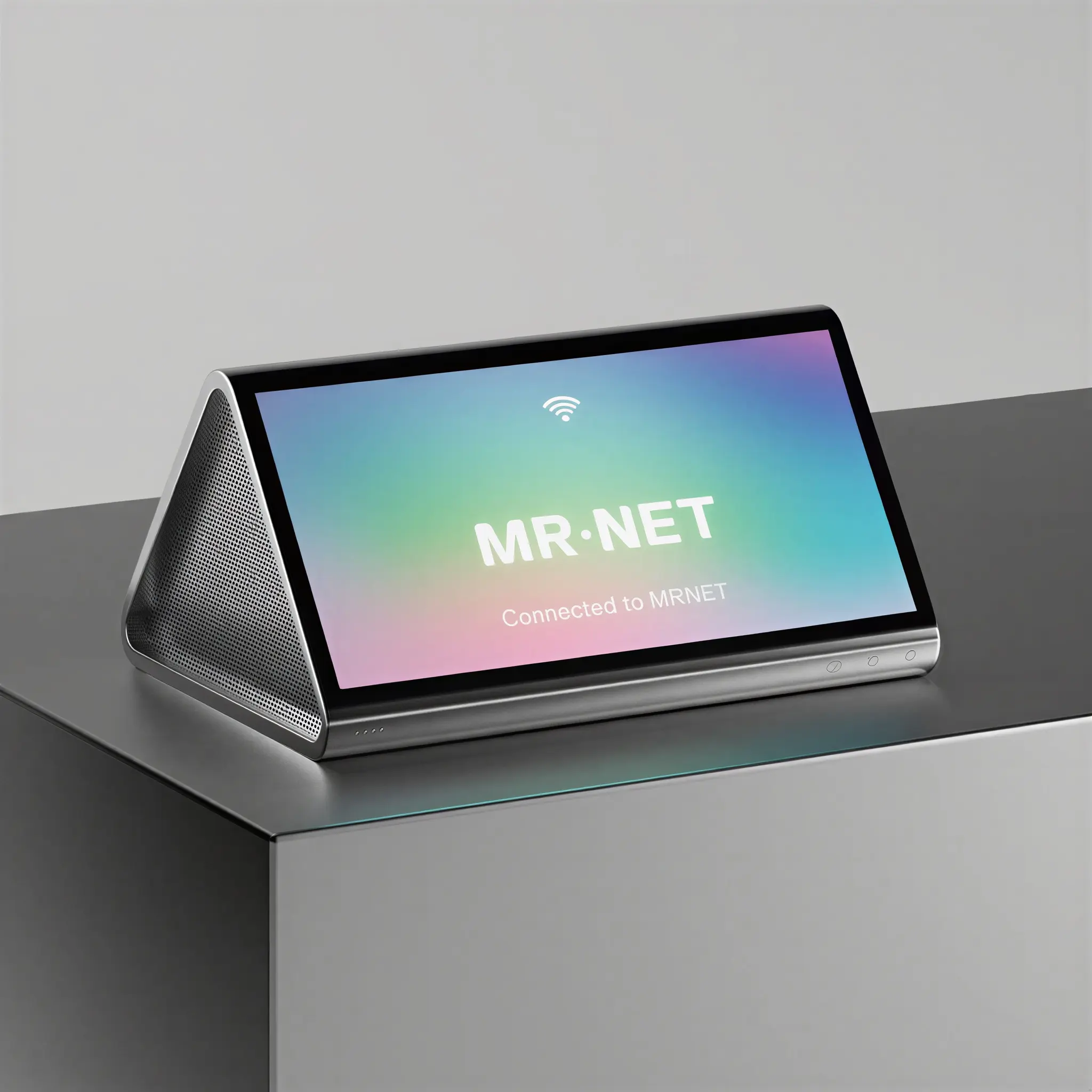
Built-in Wi-Fi
Maximum Bandwidth
Ethernet Port Speed
Power DC
Independent Internet Sources
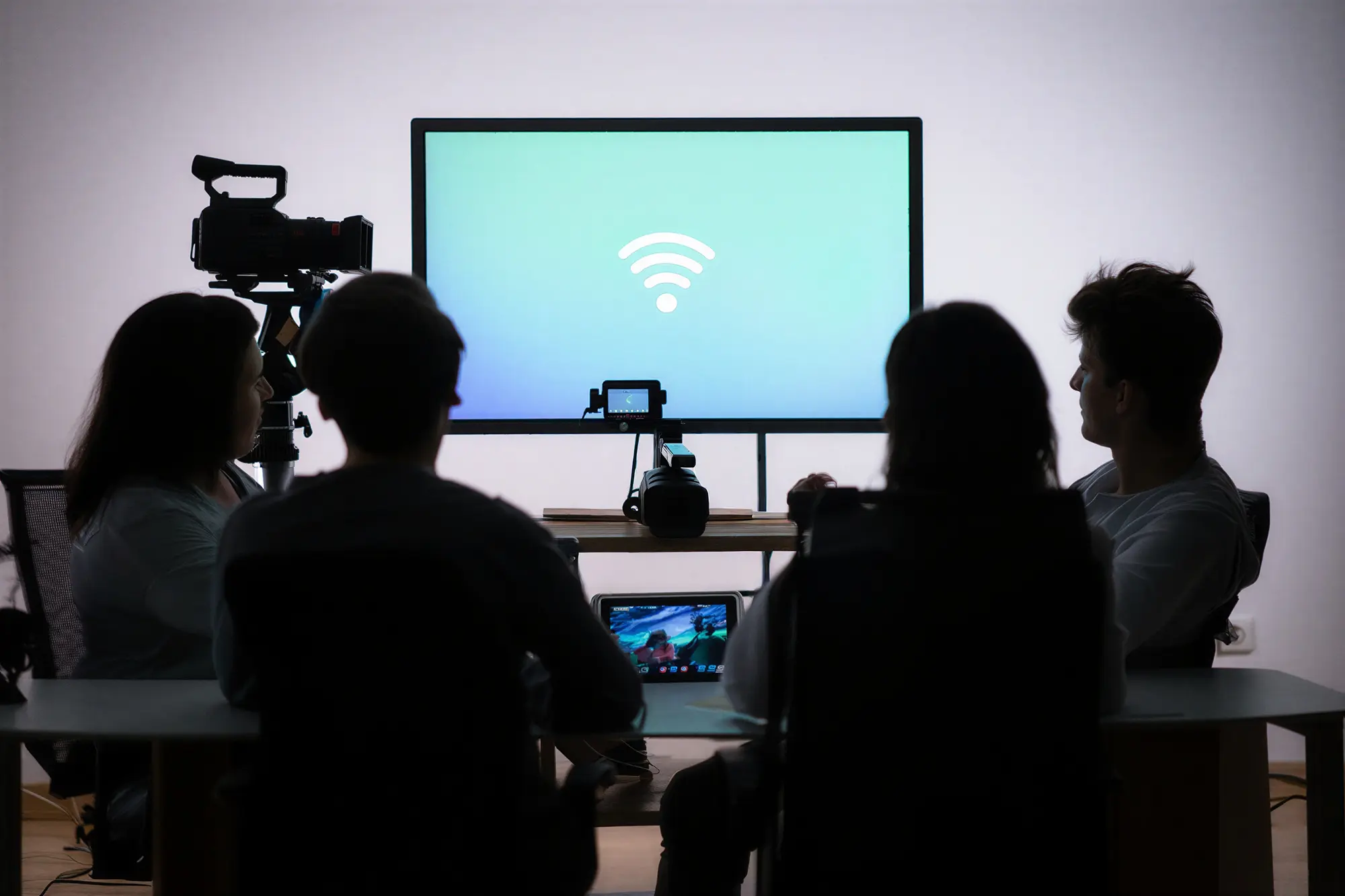
Where production teams use MR·NET
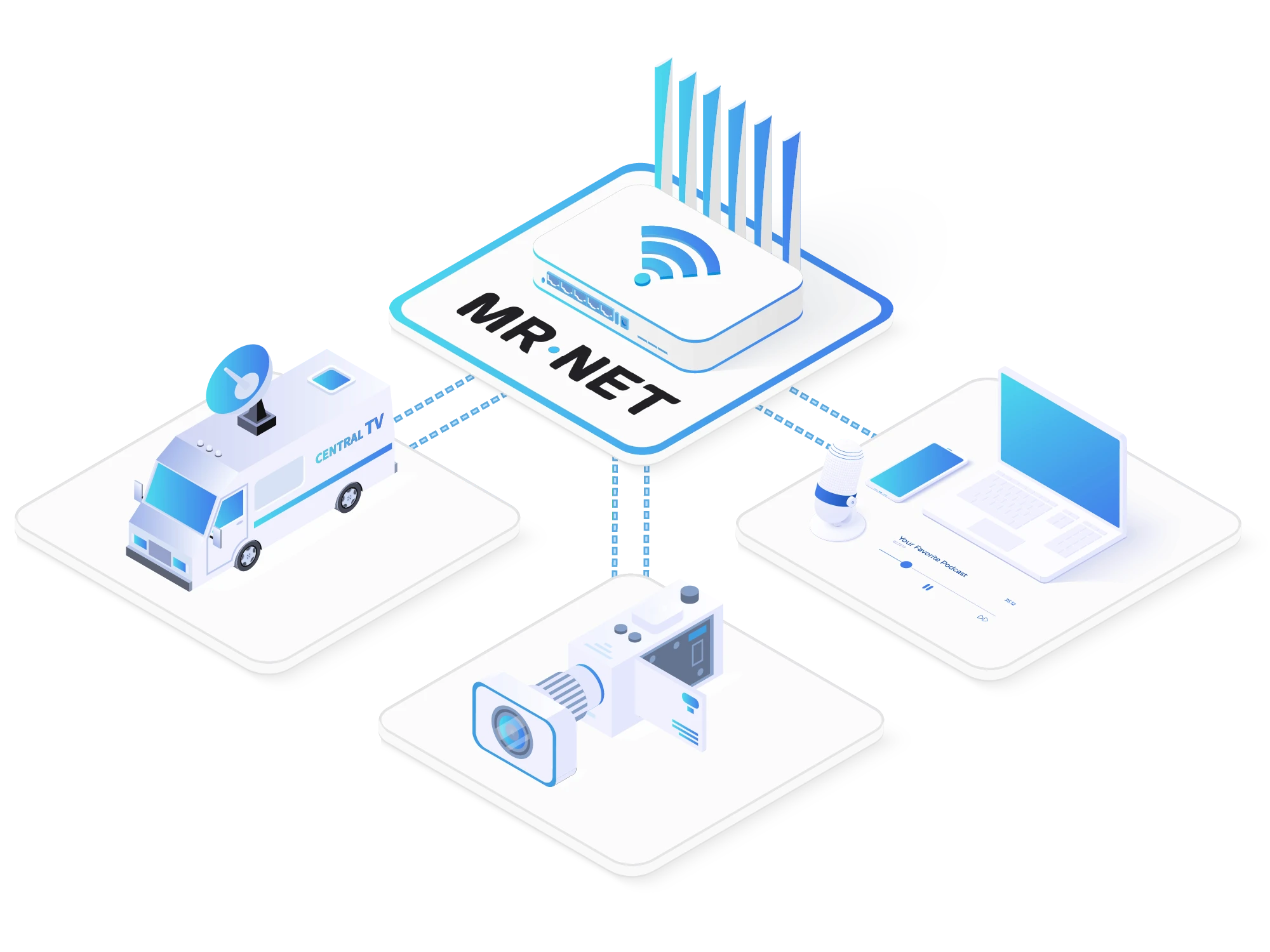
Venue Wi-Fi is shared, venue lines are priced per event, and every venue is different. Production teams bring one gateway to every job instead: same setup, same carriers, same support, from a hotel ballroom to an open field.
Venue Wi-Fi, hotspot, satellite
or bonded cellular?
Four ways to get online at an event. Only one bonds three carriers.
Venue Wi-Fi
Sold by the venue, per event.
Wi-Fi shared with attendees and exhibitors
Dedicated 5 to 6 Mbps wired line: $2,500 to $7,222 per show
Order deadlines and rules vary by venue
Worth it if you can test it under load
Phone hotspot
Your phone’s own connection.
One carrier
Consumer data plan
Can slow when that carrier’s tower is busy
Fine for email, risky for a live feed
LEO satellite
A dish that needs open sky.
Works far from cell towers
Roofs, trees and poles can interrupt service
Indoors, the dish has to go outside
Can join the MR·NET bond as a source
MR·NET bonded cellular
Three carriers, one connection.
Verizon, AT&T and T-Mobile on enterprise-tier SIMs
If one slows, the other two carry on
Depends on carrier signal where you set up
Add venue Ethernet or satellite to the bond
Venue line price: printed 2026 early-order rates at US convention centers, verified October 8, 2026, from our venue guides. Speed on any cellular connection depends on carrier signal at your venue.

Deep dive conversations
with industry experts
Interviews and demos from Tractus Events, Gotham Sound and Streaming CT, including a conversation with our CEO.



Schedule a 15-minute demo consultation to discuss your connectivity needs.
Also feel free to send an email to sales@mrnet.us or call us at (845) 666‑0696.
Same setup at every venue
Cover one event
or every event this year.
Start with a $300 trial month, credited toward purchase. Producing all year? The annual plan includes the gateway.
All prices do not include standard shipping ($24) and taxes (based on shipping location). Prepaid Data Packages could be bought separately at checkout.
Gateway, SIMs, cloud and support.
One plan.
Focus on your production while we run the connection: cloud bonding, monitoring and live support.
01
Cellular Bonding Router
Shipped pre-configured to you or your destination. Fully compatible with popular audio-video hardware and protocols. Advanced network settings supported. Shockproof Travel Case option available.
02
(3) Top tier SIM cards
One SIM each on Verizon, AT&T and T-Mobile, on high-priority enterprise plans, billed per GB. Need coverage outside the US? Contact our sales team at sales@mrnet.us.
03
Bonding Server
Optimized for your territory and use case. Cloud managed and monitored by our system and support team. Scalable on demand.
04
After-hours live support
Proactive live support from a US-based, broadcast-trained team, by online chat or phone. Average response time is under a minute. Stay focused on your production and leave network headaches to us.





Got a question?
We’ve got answers.
What is a cellular bonding router?
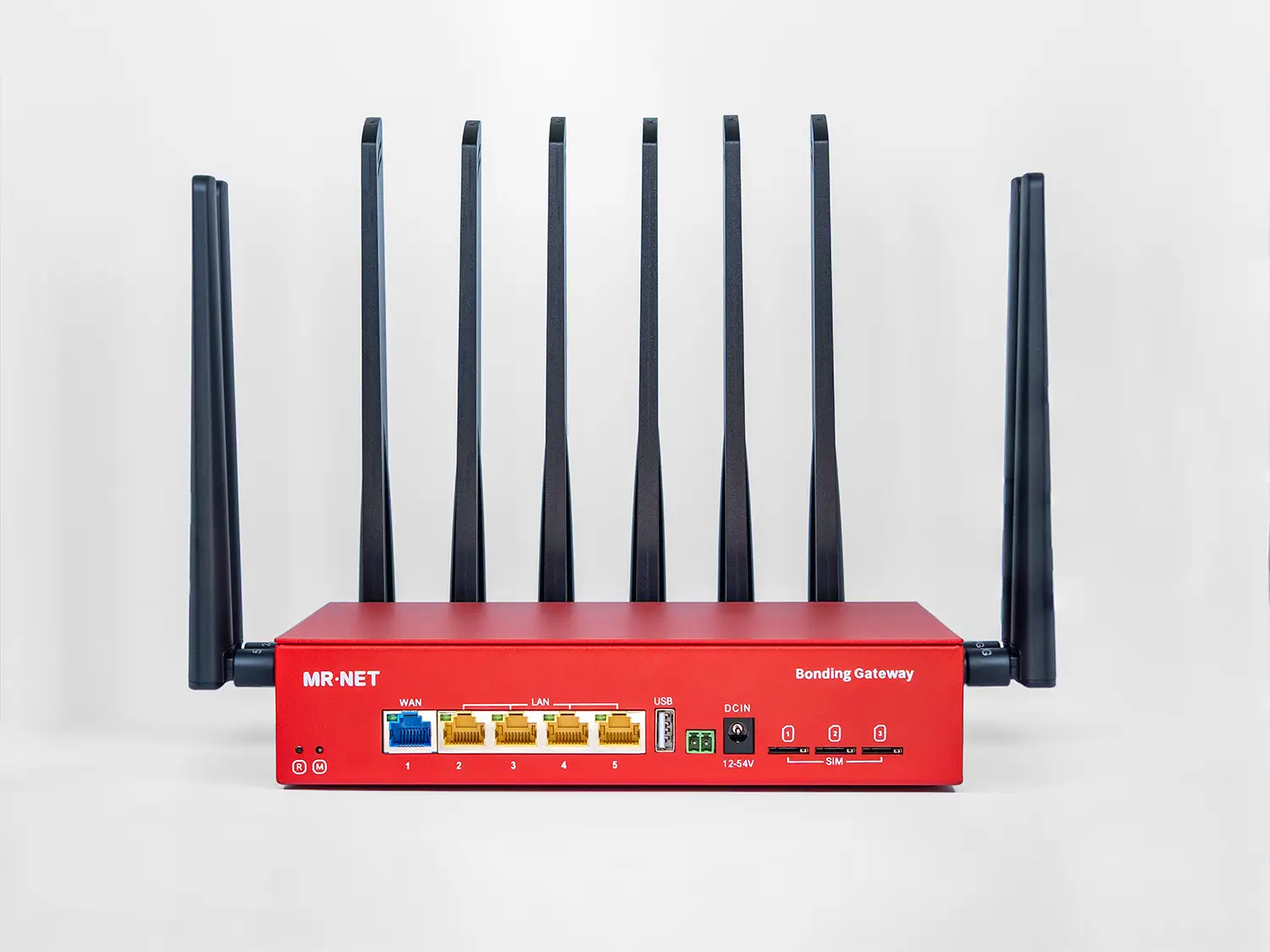
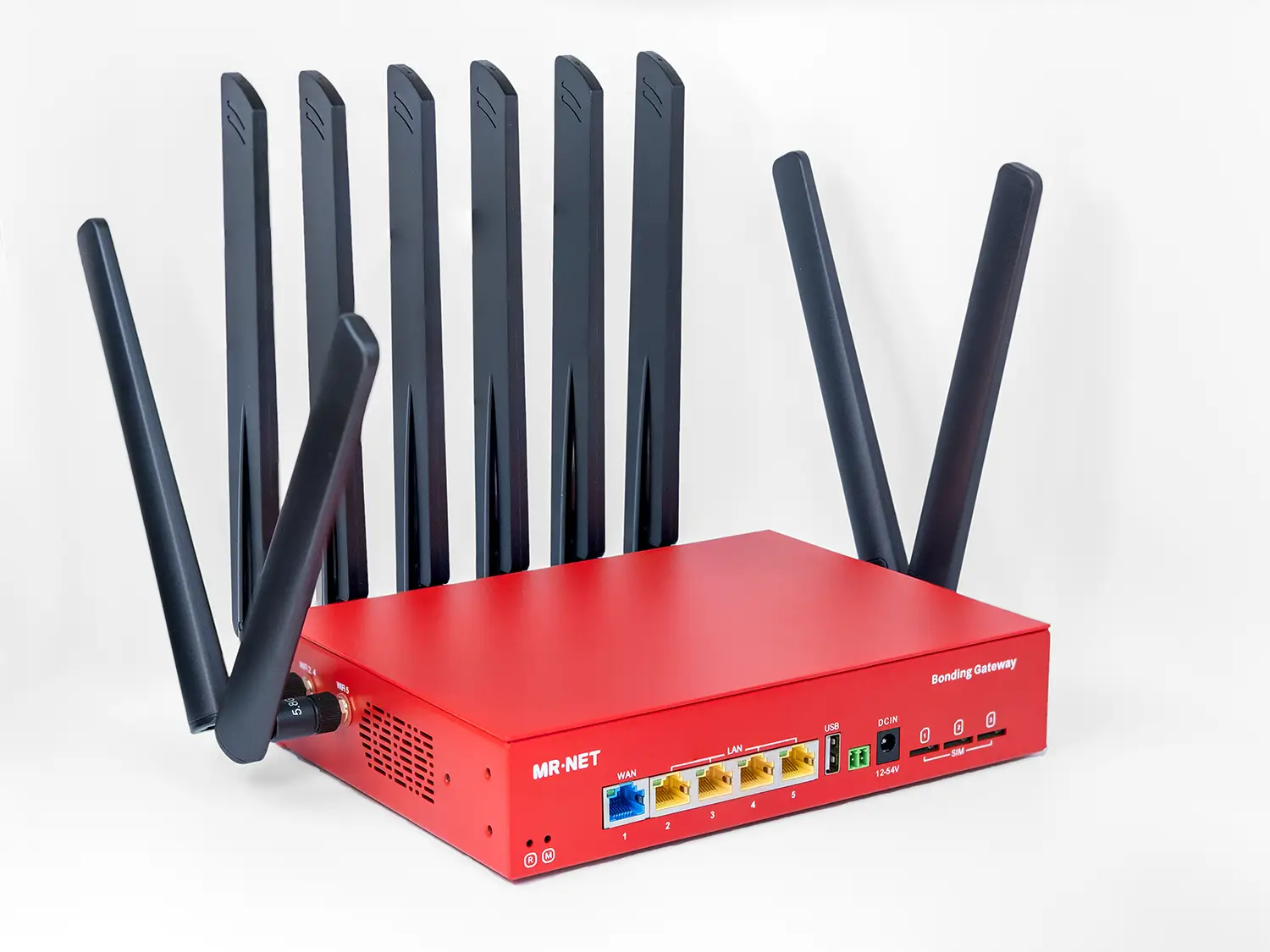
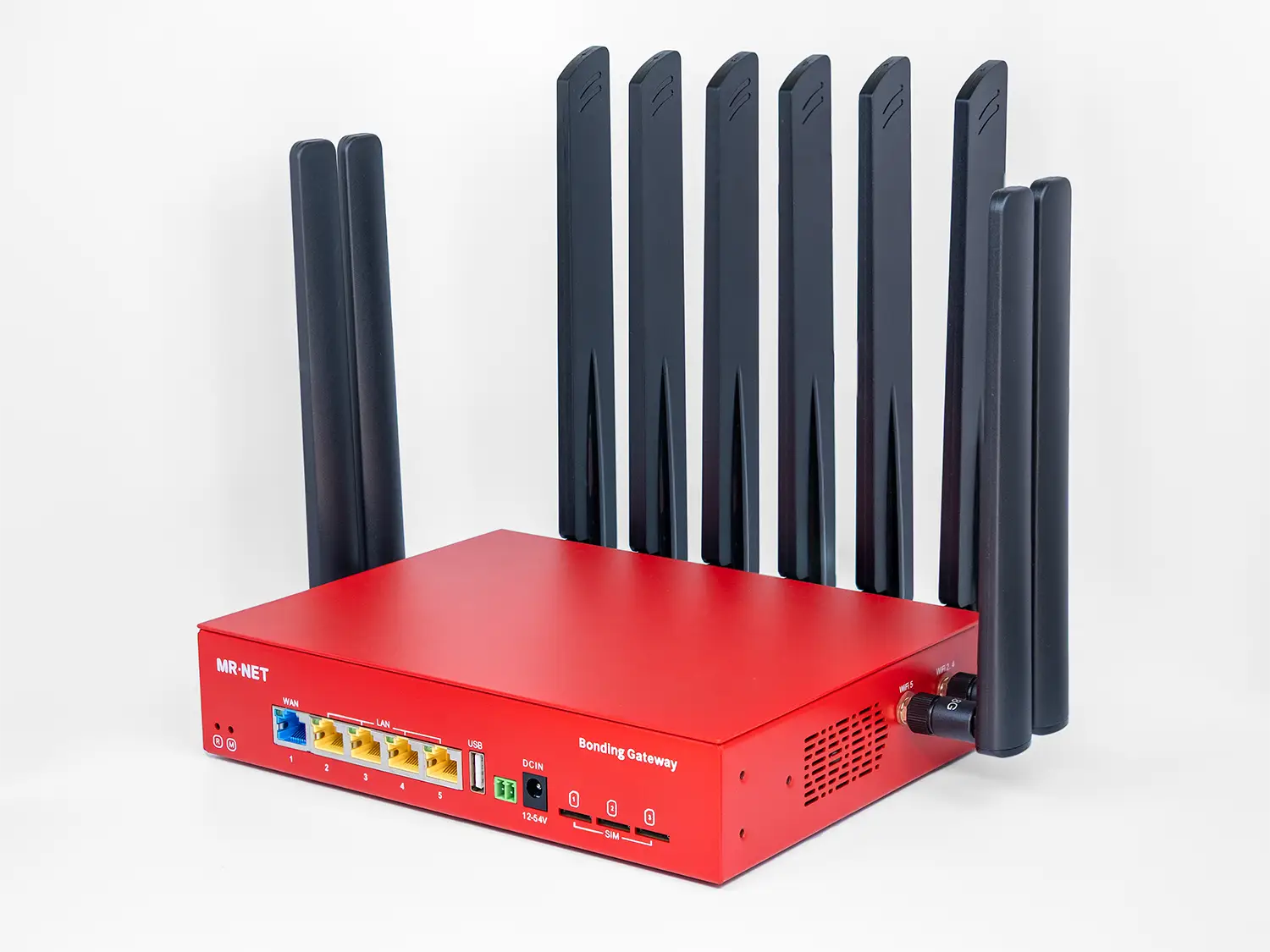
A cellular bonding router holds several cellular modems, each with its own SIM, and combines them into one internet connection for everything plugged into it. The MR 006 Plus has three modems on Verizon, AT&T and T-Mobile enterprise-tier SIMs, four Gigabit Ethernet ports and Wi-Fi 6, and bonds them through MR·NET’s cloud server. A multi-SIM router is different: it uses one carrier at a time.
Is cellular bonding reliable enough for live streaming?
Yes, when it bonds several carriers. A single-carrier connection has nowhere to go when its tower gets busy. With Verizon, AT&T and T-Mobile bonded, traffic shifts to the carriers that are performing, and session persistence keeps your stream going if one drops. Speed drops with fewer carriers and depends on signal where you set up, so test at your production position before the event.
How much upload speed do I need to stream an event?
For 1080p at 30 fps with H.264, YouTube’s live encoder guide lists 5 Mbps as the minimum bitrate and 14 Mbps as recommended; for 4K at 30 fps, 11 and 42 Mbps. Plan your upload at about 1.5 times the total bitrate you send at once, counting every camera feed and any return feed or guest call you send out. At 14 Mbps, that’s about 21 Mbps. Our bandwidth calculator adds it up.
How much data does a live stream use?
About 0.54 GB per hour for every 1 Mbps of bitrate, including roughly 20% network overhead. A 6 Mbps stream uses about 3.2 GB an hour, so a four-hour event uses about 13 GB, or about $104 at MR·NET’s $8/GB. At YouTube’s recommended 14 Mbps for 1080p30, the same event uses about 30 GB, about $242. The bandwidth calculator runs the numbers for your cameras, bitrate and hours.
Do I need a bonded encoder or a bonding router?
They do different jobs. A bonded encoder, also called a bonded cellular transmitter and often a backpack unit, encodes your video and sends it over its own bonded cellular link to a receiver or cloud service. A bonding router like the MR 006 Plus gives your whole production one internet connection: encoders, switchers, intercom, laptops and cloud tools. Already own a bonded encoder? It can run over MR·NET too. More in bonded encoder vs bonding router.
How do I choose the best bonded cellular for live streaming?
Check five things: how many carriers it bonds, whether its SIMs are enterprise or consumer plans, whether it connects your whole production or one encoder, who answers during a show, and what data costs. MR·NET bonds Verizon, AT&T and T-Mobile on enterprise-tier SIMs for every device in your production, with after-hours US-based support and data at $8/GB. The $300 trial lets you test it at your own venue.
Can I live stream from a phone hotspot?
You can, but a hotspot uses one carrier on a consumer plan. When a crowd fills the venue, many phones share the same towers, and carriers say they can slow hotspot data when a tower is congested. Bonding three carriers on enterprise-tier SIMs gives your live feed more than one path. A hotspot is fine for email and spare devices.
Is LEO satellite or bonded cellular better for live events?
They fail in different ways, so many crews use both. A LEO satellite terminal needs a clear view of the sky: a tree branch, pole or roof can interrupt service, so indoors the dish has to go outside on a long cable run. Bonded cellular works indoors wherever Verizon, AT&T or T-Mobile has signal. MR·NET can bond a satellite terminal in as an extra source. Compare them in LEO satellite vs bonded cellular.
Can I add venue internet or satellite to the bond?
Yes. The MR 006 Plus bonds up to six sources: its three cellular carriers (Verizon, AT&T and T-Mobile in the US, or Rogers, Bell and Telus in Canada), plus satellite, wired WAN such as a venue Ethernet drop, and local Wi-Fi. Plug a venue line into the WAN port and it adds bandwidth and another path on top of the cellular bond.
What happens if one carrier drops during my stream?
The gateway detects it and moves traffic to the remaining carriers, and session persistence keeps your stream or call going. Speed drops with fewer carriers, so leave headroom between your bitrate and your upload. If signal is weak on all three carriers where you set up, the connection suffers too. For hard locations, ask us about external antennas.
What are the limits of bonded cellular?
It depends on cellular signal where you set up. Speed varies by venue and time of day, a big crowd loads every nearby tower, and concrete or metal buildings weaken signal indoors. Data is billed per GB. Bonding three carriers gives your feed more than one path, but it can’t create signal where there is none, so test at your production position and add venue Ethernet or satellite for hard locations.
Will MR·NET work at my venue?
It works wherever Verizon, AT&T or T-Mobile has signal in the US, or Rogers, Bell or Telus in Canada. Check each carrier’s coverage map for the venue address, then test at your production position, not just in the parking lot. Concrete and metal buildings weaken signal indoors. For those, ask us about external antennas.
How do I get internet at an outdoor event or festival?
Bring your own connection. A bonded cellular gateway gives streams, ticketing and vendor payments one connection across Verizon, AT&T and T-Mobile, with no wired line needed. Check each carrier’s coverage map for the site and set up where signal is strongest. Power the MR 006 Plus from AC, or from a V-mount battery with a D-Tap to DC barrel cable. Where there’s open sky, add a LEO satellite terminal to the bond. Full checklist: outdoor event and festival internet.
How much does MR·NET cost for live events?
The trial is $300 for the first month, for first-time customers and the first unit, credited toward purchase. Annual prepaid is $2,498 for the first year with the gateway included, then $1,499 a year. Data is billed separately at $8/GB. Shipping is $24 standard or $199 overnight, and there’s a 14-day money-back period. See pricing.
Can I rent MR·NET for a single event?
For your first event, yes: the $300 trial covers the first month for first-time customers, with no commitment, and is credited toward purchase if you keep the gateway. If you don’t, you ship it back at your cost. Data is billed at $8/GB, so a four-hour, 6 Mbps stream adds about $104. If you produce events regularly, the annual plan is $2,498 for the first year with the gateway, then $1,499 a year.
What if my venue doesn’t allow outside Wi-Fi?
Switch the gateway’s Wi-Fi off and connect your devices to its four Ethernet ports. Your setup then broadcasts no Wi-Fi and never joins the venue’s network: it uses Verizon, AT&T and T-Mobile, like every phone in the room. Read the venue’s and organizer’s written rules and your contract, and get any approval in writing before the event.
Can a venue block or jam my hotspot or cellular gateway?
No. In a 2015 advisory (DA 15-113), the FCC’s Enforcement Bureau said no hotel, convention center or other commercial establishment, or the network operator serving it, may intentionally block or disrupt personal Wi-Fi hot spots, and federal law prohibits jamming Wi-Fi or cellular signals. The FCC fined a hotel operator $600,000 in 2014 and a convention center internet provider $750,000 in 2015. Venue and organizer rules still apply. Suspect blocking? File at fcc.gov/complaints. Not legal advice.