Cellular Bonding Router for Live Events and Trade Shows
Model:
MR 006 Plus
Three cellular modems on Verizon, AT&T and T-Mobile, bonded into one connection for everything you plug in. Ships preconfigured, with the SIMs, cloud portal and live support in one plan.
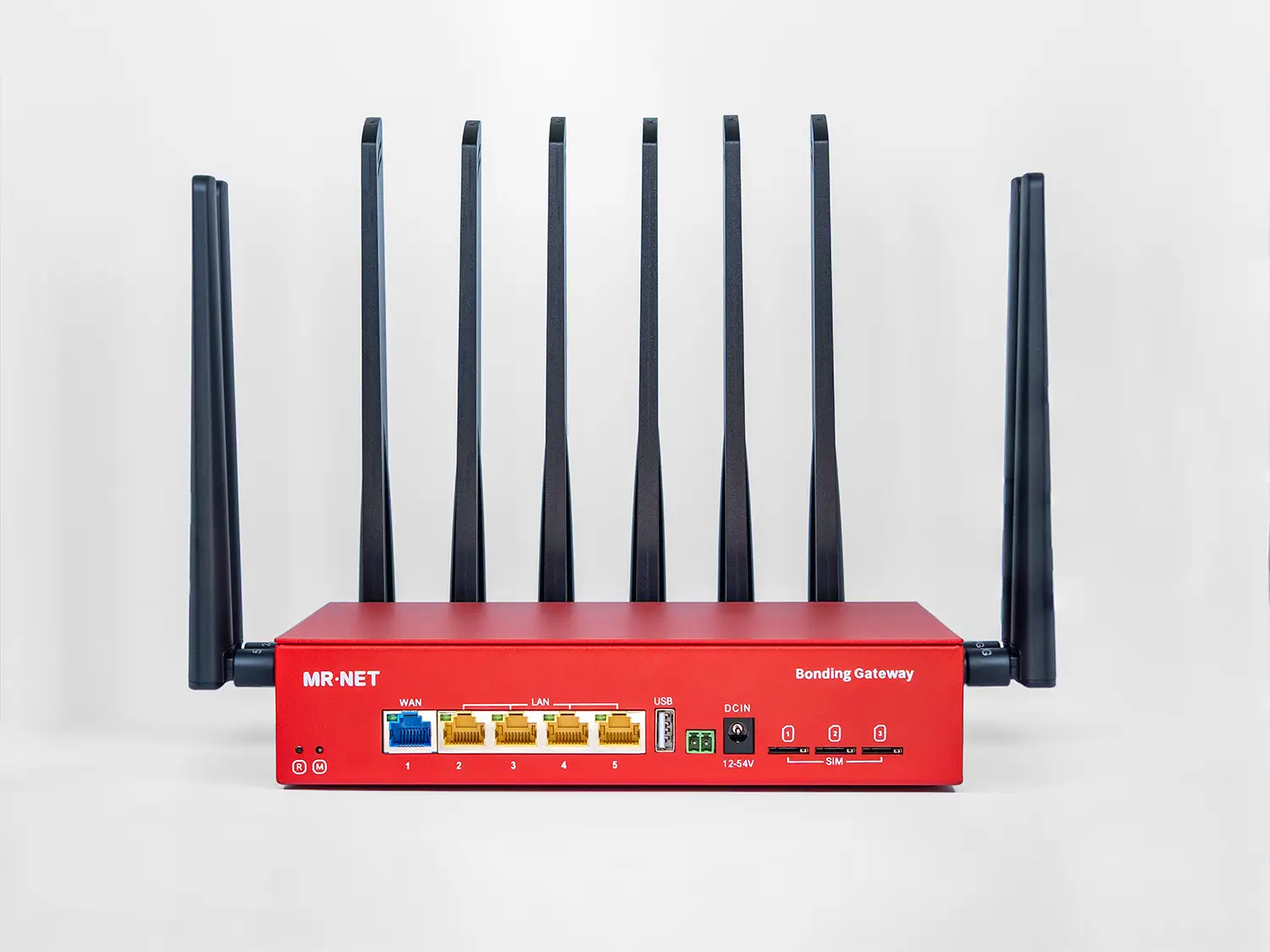
What is a cellular bonding router?
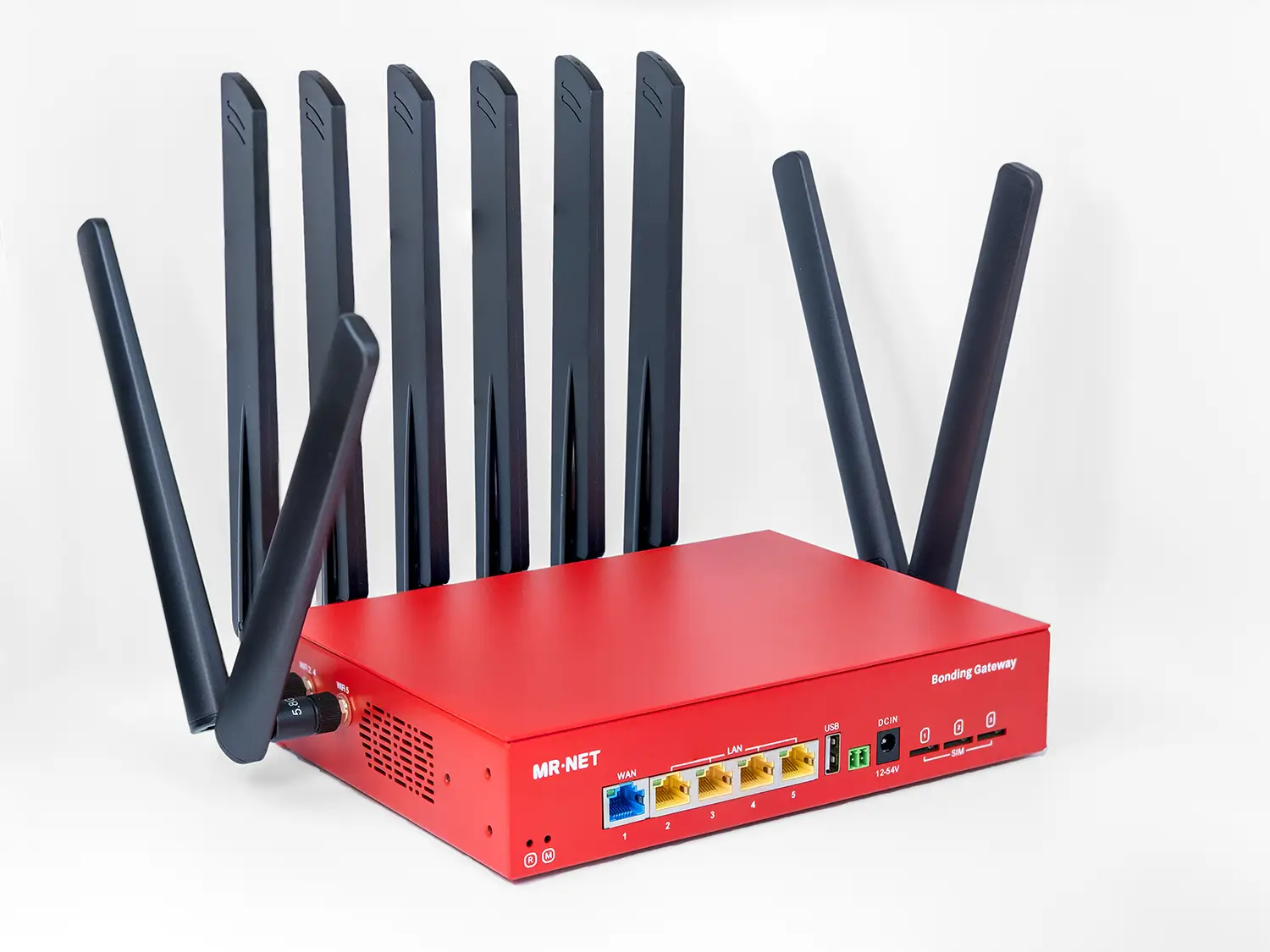
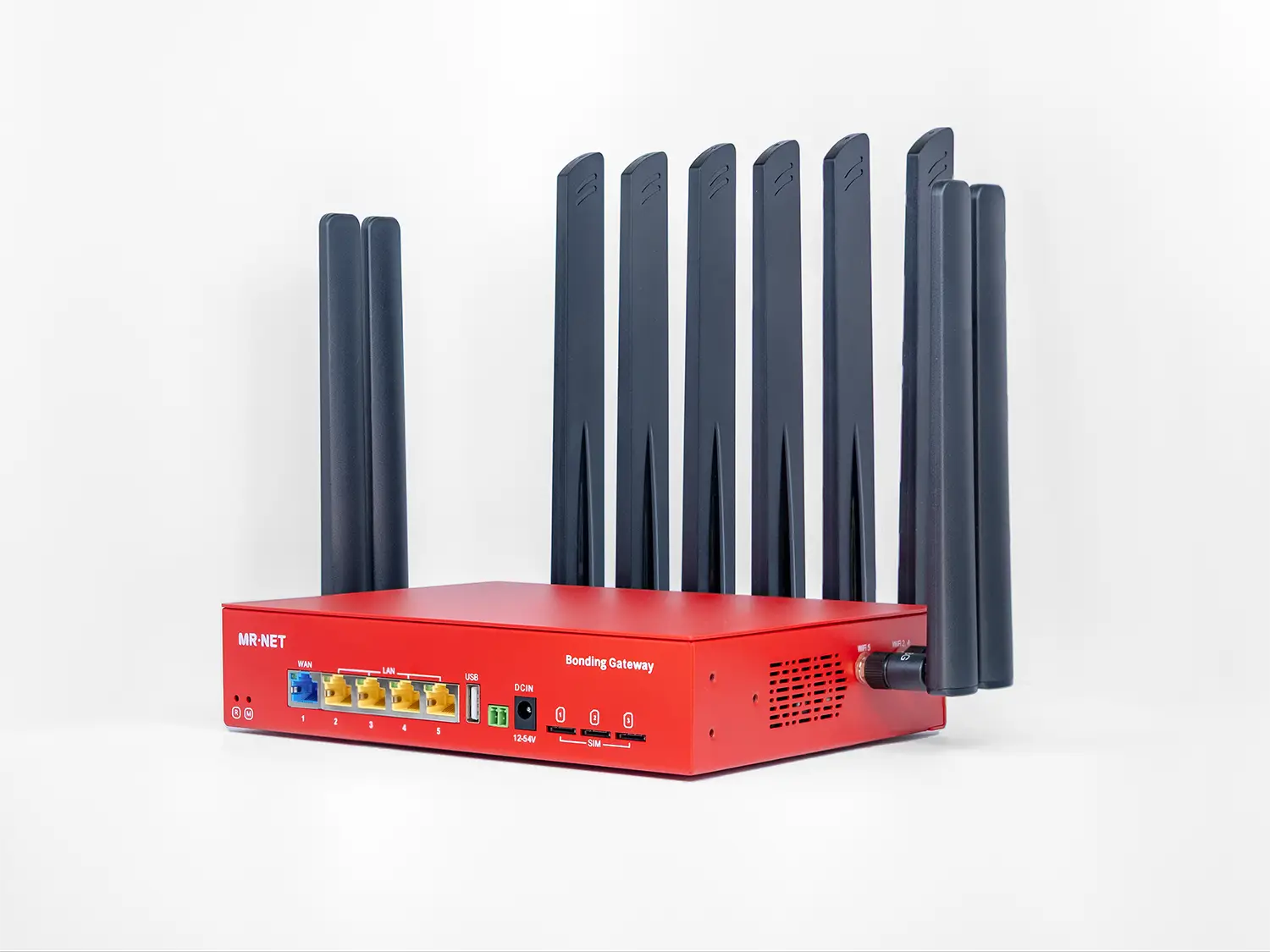
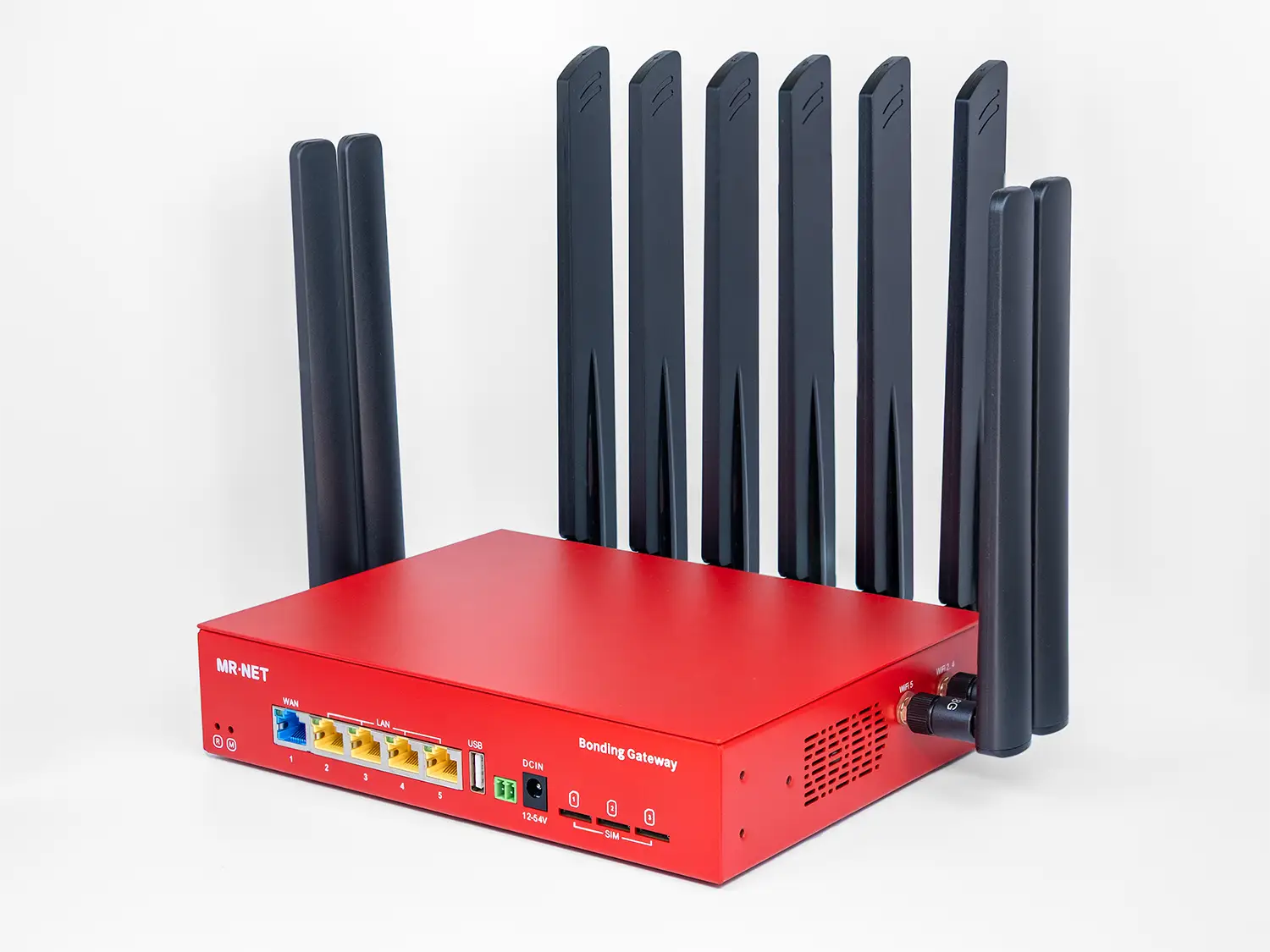
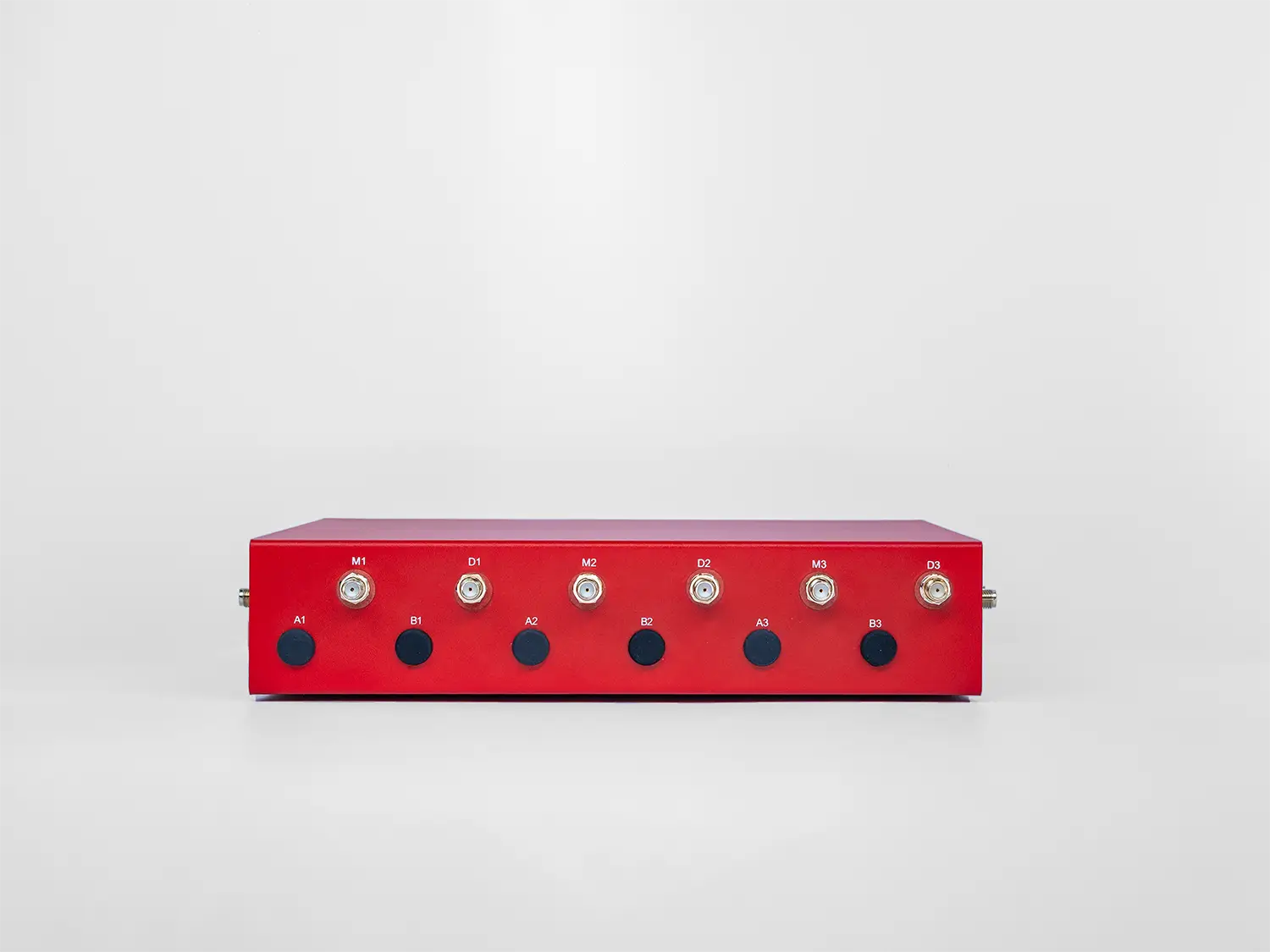
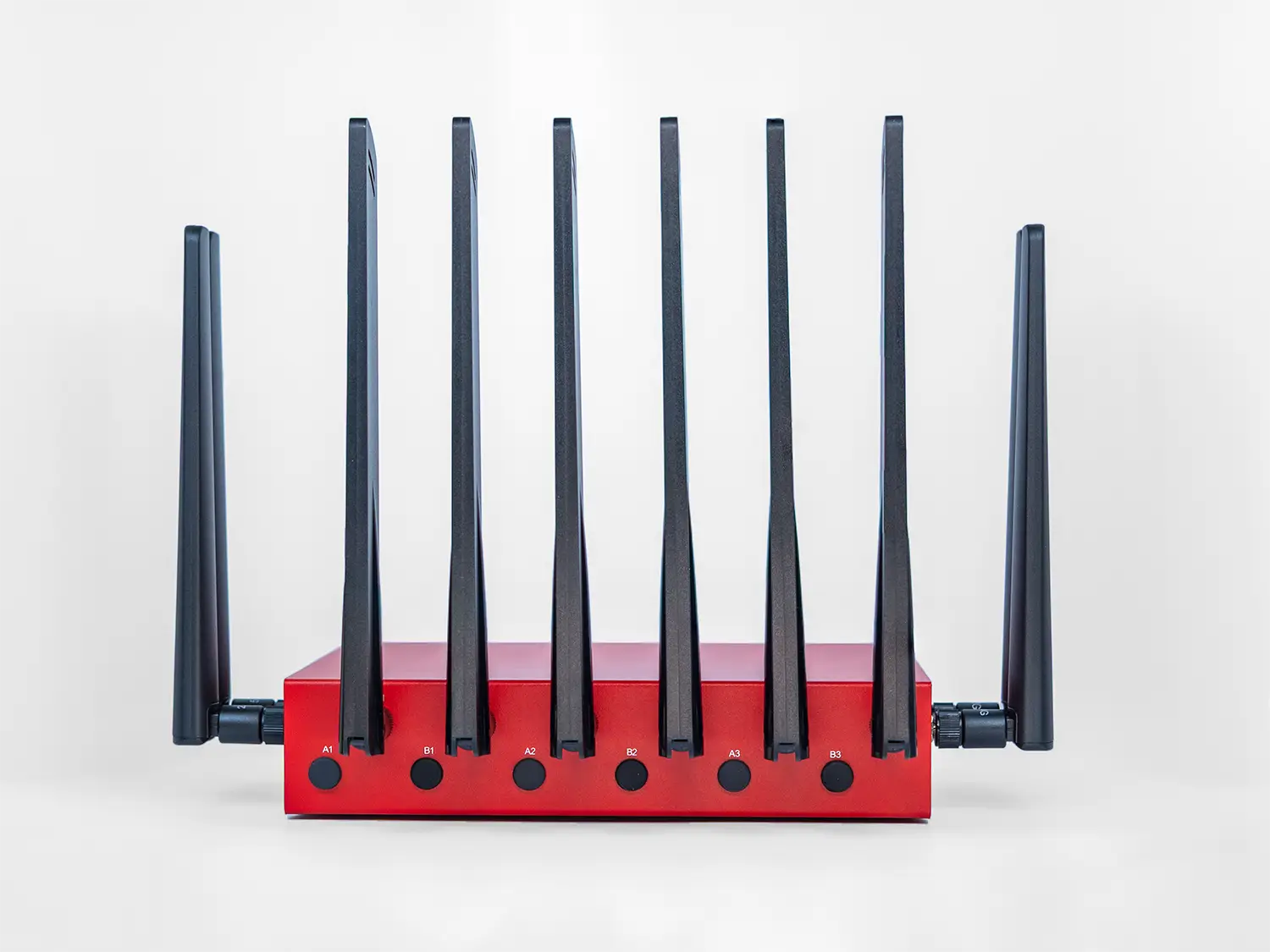
A cellular bonding router holds several cellular modems, each with its own SIM, and combines them into one internet connection for everything plugged into it. The MR 006 Plus has three modems on Verizon, AT&T and T-Mobile enterprise-tier SIMs, four Gigabit Ethernet ports and Wi-Fi 6, and MR·NET’s cloud server joins the three carriers into a single connection. If one carrier slows down or drops, traffic moves to the other two. Speed drops with fewer carriers and depends on signal where you set up.
Most teams use it to stream and produce live events: see cellular bonding for live events. Exhibitors use it for trade show internet. New to bonding? Read what cellular bonding is.
Why bond three carriers?
Venue Wi-Fi is shared with everyone in the building, venue lines are priced per event, and a phone hotspot rides one carrier that can slow down when a crowd arrives. Bonding Verizon, AT&T and T-Mobile on enterprise-tier SIMs gives your stream, intercom and laptops more than one path, with the same setup at every venue. It can’t create signal where there is none, so test at your production position, and add venue Ethernet or a satellite terminal for hard locations.
How MR·NET bonding works
The MR 006 Plus bonds up to six sources: its three cellular carriers (Verizon, AT&T and T-Mobile in the US, or Rogers, Bell and Telus in Canada), plus satellite, a wired WAN such as a venue Ethernet drop, and local Wi-Fi. MR·NET’s cloud bonding server rejoins the traffic into one connection, and session persistence keeps your stream or call going if a carrier drops. It ships preconfigured, with a cloud management portal and US-based live support.
Built for live production and trade shows
Perfect for:
Trade shows, festivals, and temporary installations
First responders and emergency services
It works wherever Verizon, AT&T or T-Mobile has signal in the US, or Rogers, Bell or Telus in Canada.
How a bonding router keeps you online
Every network at once. One connection that stays up.
The connectivity vibe
That drives business.
We move fast to keep you online. By putting cellular bonding technology at the heart of our network, we deliver the reliability businesses crave. If you’re driven by uptime, simplicity, and the security of a connection on three carriers, you’ll thrive with MR·NET.
Three carriers, one connection
Bonding combines Verizon, AT&T and T-Mobile into one connection. If one slows or drops, traffic moves to the other two.
Plug-and-play setup
Receive your pre-configured cellular bonding router, plug it in, and get online in 2–3 minutes. No IT team required.
Aggregated channel
Combines bandwidth from Verizon, T-Mobile and AT&T into one wireless business connection, wherever they have signal.
Automatic failover
When a carrier drops, traffic moves to the others, and session persistence keeps your calls and streams connected.
Proactive live support
US-based team monitors your connection proactively. We often fix issues before you even know they happened.
Works where wires don’t
Live events, construction sites and pop-ups: business internet wherever Verizon, AT&T or T-Mobile has signal.
What is MR·NET?
How does MR·NET's internet bonding service work?
What are the benefits of cellular bonding technology?
How can I get a MR·NET bonding router?
What's included in the service fee?
How does data usage pricing work?
What data plans are available?
Can I use my own SIM cards?
Does MR·NET work internationally?
What is your cancellation and return policy?
What is internet bonding and how does it work?
How is MR·NET different from a traditional ISP or mobile hotspot?
What industries and use cases is MR·NET designed for?